THE OFFICIAL NEWSLETTER FOR MEMBERS OF CONTENT AND CONNECTIVITY HUMAN RESOURCES
JAN/FEB 2026

What’s Keeping HR Leaders
Up at Night?
Insights on AI, Talent Development and the Future of Work
Human resources leaders across the media, technology and entertainment industries find themselves at a pivotal point in time. The pace of change has accelerated, employee expectations continue to evolve, and artificial intelligence is no longer a future concept—it is a present-day reality reshaping how work gets done. To better understand what lies ahead, we checked in with several HR leaders from the C2HR community, asking them to reflect on the trends, challenges and opportunities shaping the year to come. Their responses reveal a profession balancing innovation with humanity, agility with sustainability and efficiency with empathy. What emerges is a clear message: the future of HR will be defined not only by new tools, but also by how thoughtfully organizational leaders support the employees using them.
AI’s Expanding Role in HR
Artificial intelligence is no longer confined to pilot programs or innovation labs. This year AI will become embedded in core HR operations, from recruiting and onboarding to workforce planning and employee engagement. Beth Weems, the Senior Director of Compensation, Benefits, HR Operations & HR Technology Cable One, observed, “For those who are late adopters, I expect a rush to catch up. For those organizations who have already adopted, I believe that AI will provide even faster insights, such as predictive workforce analytics and enhancing the employee experience. Letting AI analyze the data will allow HR professionals to focus on and strategize better end results.”
Melissa Dutmers, Vice President for Performance and Engagement at Paramount Global, noted, “AI and new ways of working are creating real opportunities to improve productivity and strengthen the overall employee experience. Perhaps the bigger breakthrough is when leaders truly listen to what people need to do their best work. When that happens, that’s where I see AI having next level impact on business outcomes – AI becomes a partner to an engaged workforce.”
AI is already reshaping recruiting, onboarding and workforce planning. Tools powered by generative AI are streamlining resume screening and interview scheduling, while predictive analytics are being used to forecast turnover, identify flight risks and personalize learning paths. However, the technology cannot be deployed in a vacuum.
Kristin Hansen, Human Resources Vice President at Hearst Television, explained, “AI will elevate the employee experience. However, the human element—empathy, context and trust—will remain essential. The HR function will need to balance automation efficiency with ethical governance and human connection.”
Husam Kakish, Vice President of Human Resources at Midco shared his insight, “Ethical AI use will be a top priority. Companies should actively review software/vendors’ algorithms for bias and transparency and work with legal and compliance teams to ensure responsible deployment.”
For more insight into how AI is empowering HR, check out this recent HR Pulse article.


Skills Driven Adaptability
Another major theme in 2026 will be the ongoing prioritization of skills-based talent strategies. Kristin explained “This approach involves shifting from traditional role-based hiring and development to a more dynamic focus on skills, adaptability and learning agility.”
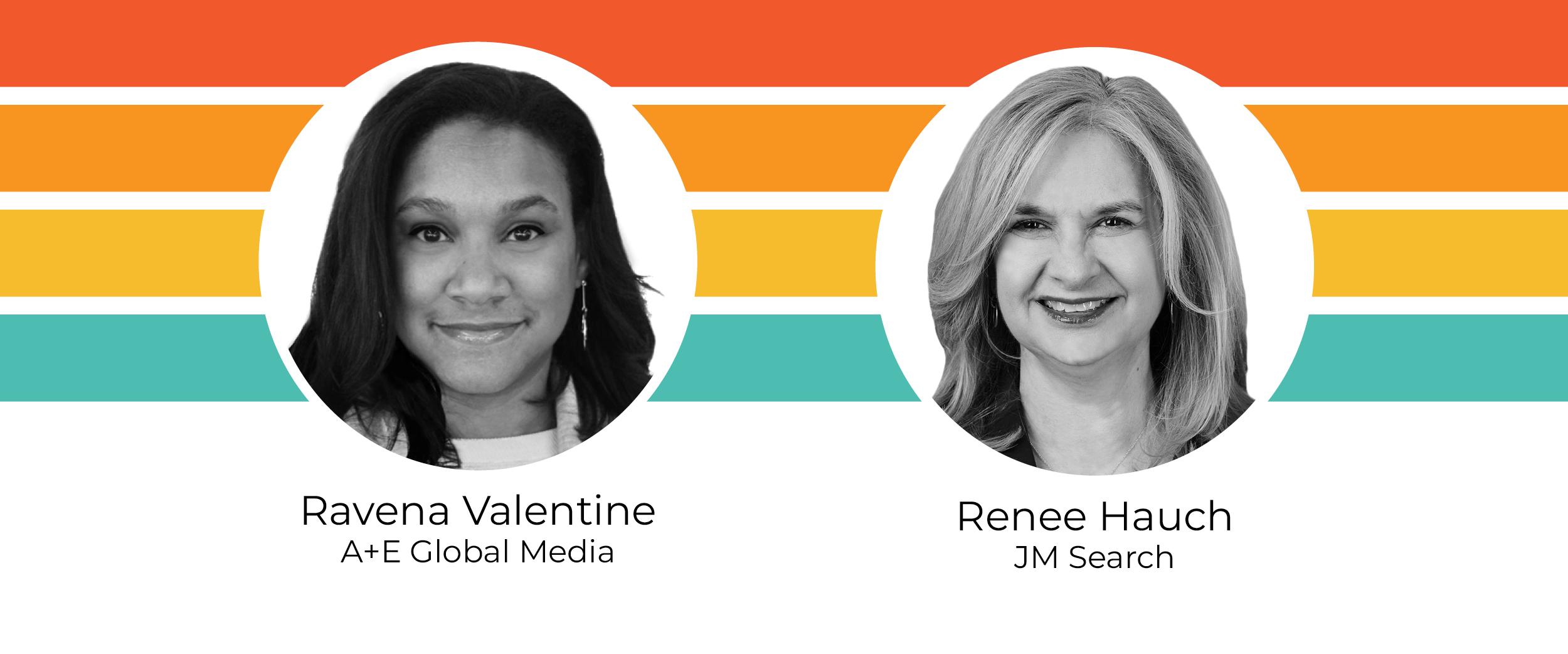
Renee Hauch, Principal at JM Search, agreed, “The pace of change in media and tech requires rapid agility. Organizations need people who can shift roles, learn new capabilities and adapt to evolving business models.”
Husam at Midco stated, “With the constant competition, a maturing industry and other challenges, the need for qualified talent will continue. Organizations will look to leverage internal and external resources to upskill and reskill talent to improve the customer service experience and reduce overall costs.”
“Setting the expectation of lifelong learning is essential to any organization’s success,” says Ravena Valentine, EVP and Chief People Officer at A+E Global Media. “A+E has fully embraced AI fluency and engagement as a core company value and key goal for every employee. As well, our People Team is rolling out new AI tools to drive faster, more efficient responses in a rapidly changing environment. Agility is critical given the ever-evolving landscape, and all the elements that come our way each day.”
It’s important to recognize that a skills-based approach to leadership and development is not static. Kristin explained, “The half-life of skills is shrinking rapidly, making it increasingly difficult to guarantee that employees possess the right blend of technical, creative and interpersonal capabilities for the roles of tomorrow. We need to focus more on learning ecosystems rather than one-off programs.”
Charter Communications has implemented strategies designed to drive skill development. The first is a self-progression approach that puts career growth in employees’ hands. In field operations, several Charter job families have progression paths where employes complete coursework to move up levels, receiving a $500 bonus and 10% raise with each step. In addition, Charter’s tuition-free Education Benefit gives employees the ability to continue their education with no upfront costs.
During the 2025 C2HR CON, HR leaders from Comcast, The Walt Disney Co., and Charter Communications shared how their companies are transforming talent through upskilling. You can access their learning and development insights in this HR Pulse article.
Employee Well-Being
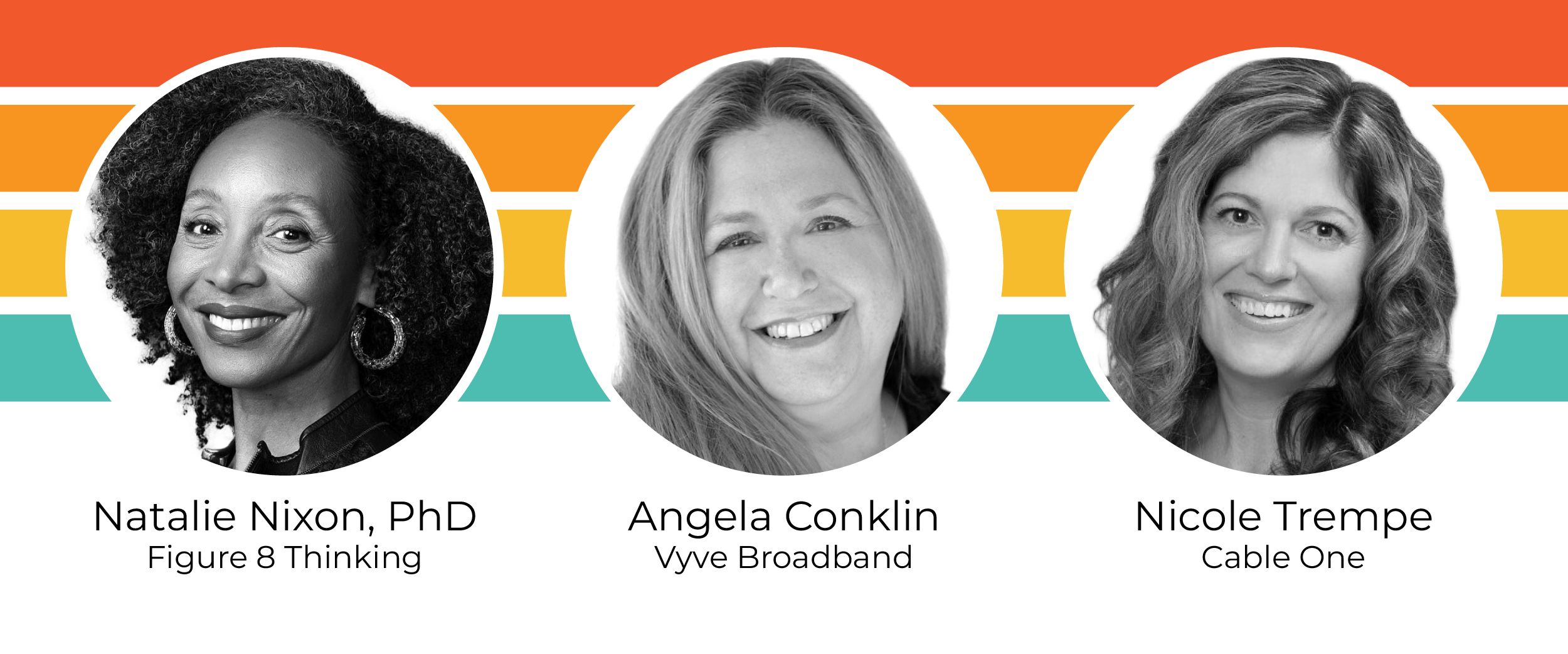
One of the most emotionally resonant themes among HR leaders in media, tech and entertainment is employee well-being. As organizations push for speed, innovation and efficiency, burnout is a serious concern. Angela Conklin, Senior Vice President for HR at Vyve Broadband, captured the tension many leaders feel, “We are asking teams to move faster, think sharper and absorb more change than ever before. Technology evolves quickly, but people aren’t built to endlessly sprint. The greatest threat to performance isn’t disengagement, it’s depletion.”
Natalie Nixon, PhD, Creativity Strategist & CEO of Figure 8 Thinking agrees. During a recent HR Learning Series webinar (available on demand), Natalie shared practical steps to move away from a “hustle culture” to a framework that helps teams shift from burnout to breakthrough. She stated, “At this critical inflection point where AI is reshaping every industry, the competitive advantage isn’t working harder—it’s working human.”
To battle burnout, several HR leaders encouraged speaking openly about the importance of self-care in high-performance cultures. However, they also stipulated the importance of leading by example.
Ravena admitted, “I preach to my team to take time off… but I don’t always practice that myself, and it is visible. We can start by practicing healthy boundaries and letting people enjoy their time away from work.”
Beth at Cable One agreed, “The workplace will not fall apart if I don’t check in while on vacation.”
Beyond burnout prevention, several HR leaders said their companies will continue to invest in employee wellness in 2026. Vyve Broadband recently rolled out 24/7 access to medical and mental health resources for employees and their families. Angela noted that Vyve employees are already sharing stories about catching health concerns early.
Beyond physical and mental wellness, many companies recognize the importance of financial well-being and its impact on hiring and retention. Nicole Trempe, Manager of Talent Acquisition at Cable One, explained, “What keeps me up at night is keeping engagement and morale up during a time when you are hearing a lot about corporate layoffs and downsizing. I am focusing on transparent communication, reinforcing career development opportunities and recognizing achievements.”
Amid industry consolidation and economic uncertainty, employers are likely to tighten their compensation budgets. This reality will add another challenge for HR leaders. Renee at JM Search offered a page from her playbook, “If companies can’t rely on compensation increases to keep top performers, they’ll need to find new ways to engage them — such as international assignments, special projects or expanded responsibilities.”
A Human-Centered Strategy
When reviewing insights contributed to this article, one unifying theme stands out: An organization’s future is not just about technology; it is about people. As human resources professionals, we will play a critical role in helping our organizations strike the right balance between these two elements in 2026.
“Innovation shouldn’t come at the cost of well-being. When organizations build capacity in both pace and care, their [workforce] and their business are better for it,” said Angela Conklin at Vyve Broadband.
No matter what the year ahead holds for you, Kristin Hansen at Hearst Television is confident that, “The human element—empathy, context and trust—will remain essential.”
Thank You, 2026 Sponsors!
If your company would like to further C2HR’s efforts in 2026, please contact
Parthavi Das at parthavi@frontlineco.com or visit C2hr.org/events/event-sponsorships.
CHAMPION

EMPOWER

ENGAGE